By Dr.Shahzad khurram , Medical Review: Pediatric Clinical Guidelines 2024-2026
You’ve reached six months—congratulations! If you’re reading this, you’ve likely survived the steep learning curve of new parenthood and are ready for starting solids. Now, you’re standing at the edge of a new frontier: infant weaning.
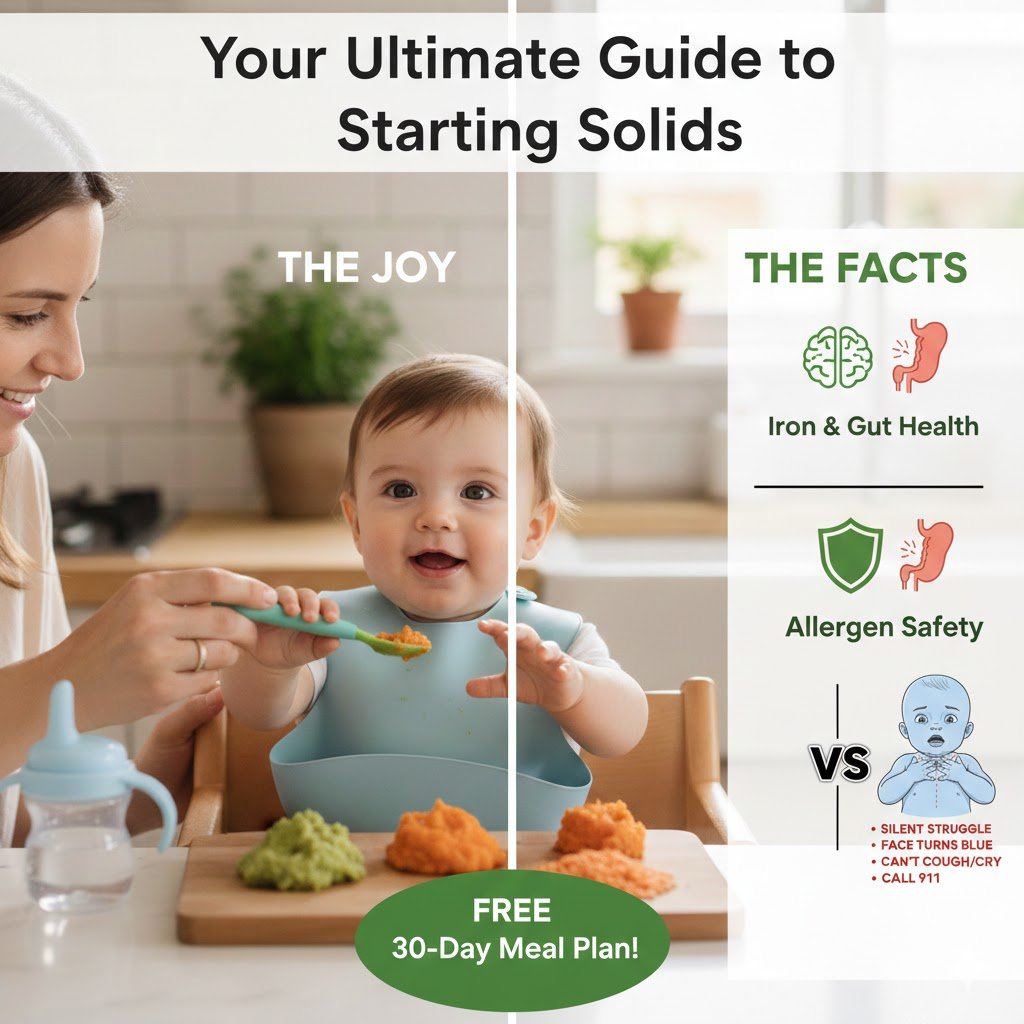
It’s a milestone that brings excitement and total terror. Will my baby choke? Will they have a food allergy? As a pediatrician, I’ve guided hundreds of families through this first foods journey. Let me walk you through the latest weaning guidelines that make this transition safer and more effective than ever.”
Why Six Months is the Best Time for Starting Solids
I often hear in my practice, “But my grandmother started my mom on cereal at three months!” While that was common in the past, modern pediatric medicine has caught up with infant physiology.
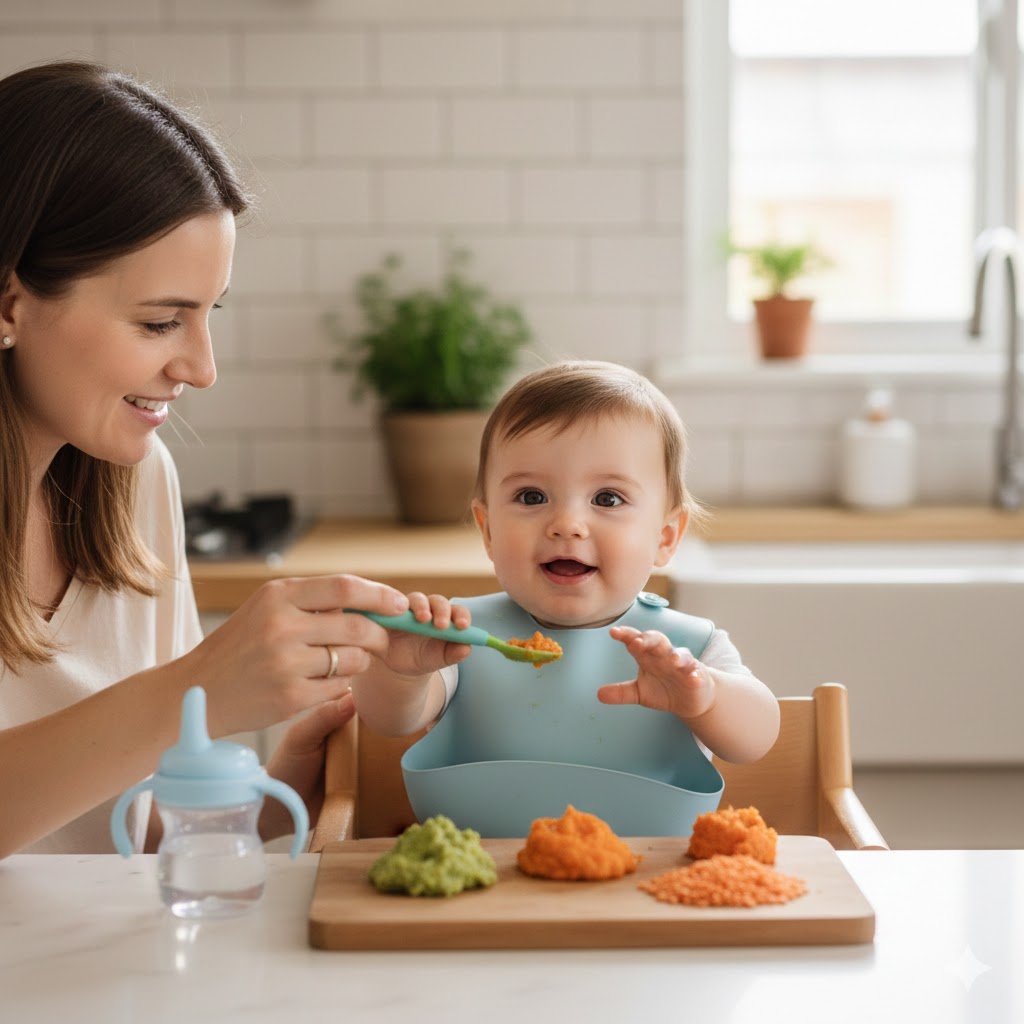
The Biological “Gatekeepers”
Your baby’s digestive system isn’t ready for solid food until around six months. Before this, their gut lining is still developing (often called the “open gut” phase), and the kidneys can’t handle the protein load from regular food. The CDC and American Academy of Pediatrics (AAP) both recommend exclusive breastfeeding or formula until this milestone for these very reasons.
The Developmental “Texture Window”
But here’s what many parents don’t realize: there’s also a developmental window we need to respect. Between 6 and 9 months, babies are remarkably open to new textures. Research published in pediatric nutrition journals shows that babies introduced to varied textures during this period have fewer sensory issues with food as toddlers. If we miss this window by sticking to smooth purees for too long, we might face a much pickier eater later on.
What’s Changed in the Last Decade?
The guidelines have shifted dramatically based on new evidence. We are currently in what I call the “Golden Age” of infant nutrition research.
1. The Allergen Revolution
We used to tell parents to delay eggs, peanuts, and fish until after age one. That advice was completely backwards. Major studies, including the LEAP (Learning Early About Peanut Allergy) and EAT trials published in prestigious journals like the New England Journal of Medicine, proved that early introduction (around 6 months) actually prevents allergies. The FDA now recommends introducing peanut-containing foods early for most infants to “train” the immune system.
2. Baby-Led Weaning (BLW) Gets Scientific Backing
While purees are still perfectly fine, we now know that offering soft finger foods from the start helps with motor development and hand-eye coordination. The key is that babies can explore food at their own pace, which helps them recognize their own fullness cues.
3. Gut Health and the Microbiome
Your baby’s microbiome—the community of bacteria in their intestines—is being shaped right now. Diverse fiber sources from vegetables, fruits, and whole grains help establish healthy gut bacteria that support immunity and digestion for life. It’s about “seeding the garden” for long-term health.
Your First-Month Starting Solids Plan: The Safest Start
When you start, don’t think of it as “feeding” so much as “exploring.” The goal in the first few weeks is simply to introduce the concept of food.
Weeks 1-2: Single-Ingredient Foods
Start with iron-rich options. Your baby’s iron stores from birth are running low by now:
- Iron-fortified baby cereal: Mixed with breast milk or formula (thin, “drip-off-the-spoon” consistency).
- Mashed Avocado: A powerhouse of healthy fats for brain development.
- Pureed Sweet Potato: Naturally sweet and easy on the stomach.
- Pureed Cooked Apple or Pear: Great for fiber.
Weeks 3-4: Expanding the Palette
Now, we start adding more variety:
- Mashed Banana: A classic for a reason.
- Pureed Carrots or Butternut Squash: Excellent sources of Vitamin A.
- Well-cooked Mashed Lentils: A fantastic plant-based protein.
The Three-Day Rule: Introduce one new food every 2-3 days. This helps you spot any reaction—rash, vomiting, diarrhea, or unusual fussiness—and know exactly which food caused it.
The Iron Advantage: Why Pairing Matters
Here’s something most weaning guides miss: not all iron is absorbed equally. * Heme Iron: Found in red meat (beef, lamb). It’s easily absorbed by the body.
- Non-Heme Iron: Found in lentils, beans, and fortified cereals. This is harder for the body to use on its own.
The Doctor’s Fix? Vitamin C. Serving lentils with a squeeze of lemon juice or offering bell pepper strips alongside iron-fortified cereal can triple iron absorption. This is evidence-based medicine meeting practical parenting.
Safe Foods Reference Table
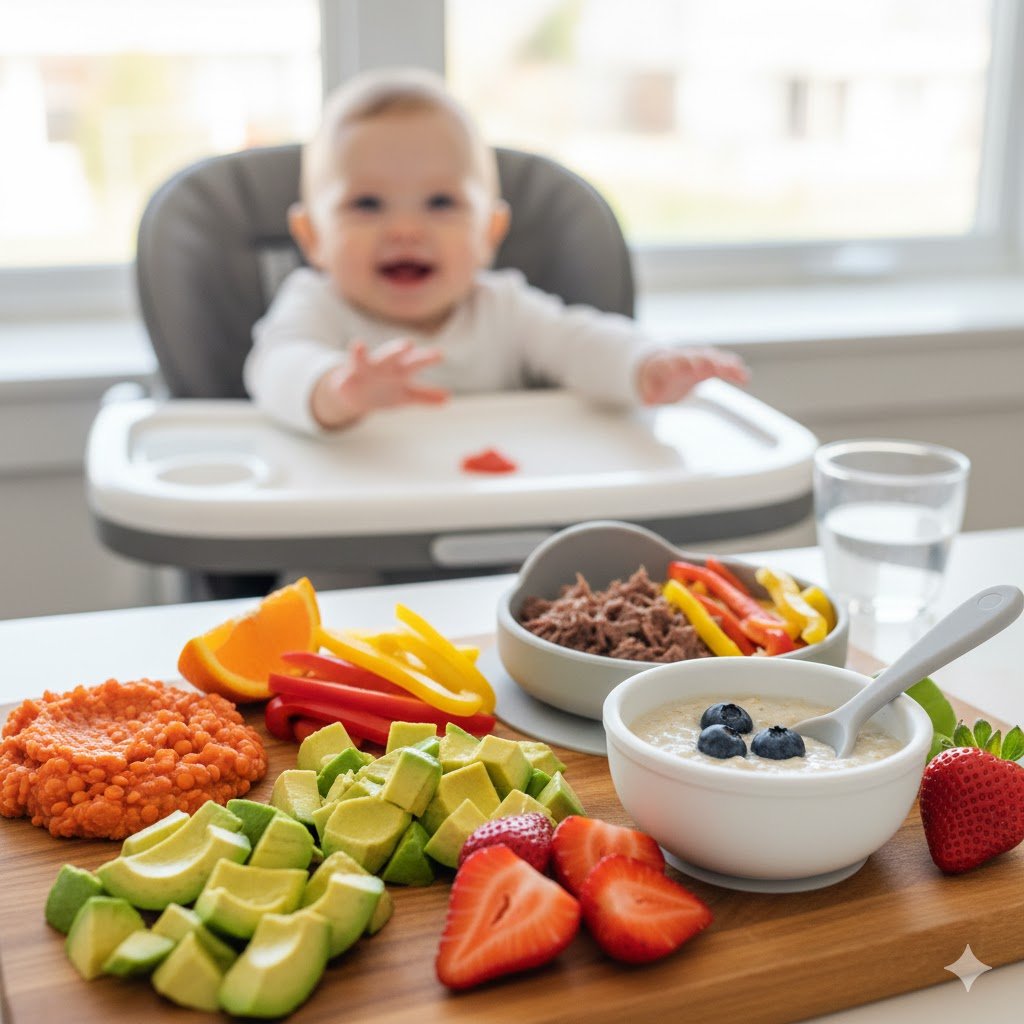
To make your grocery trips easier, I’ve put together this quick-reference guide for your baby’s first month.
| Food Category | Safe Options | Preparation Method |
| Vegetables | Sweet potato, carrots, butternut squash, green beans, peas, zucchini | Steamed until very soft, mashed or pureed |
| Fruits | Banana, avocado, apple, pear, papaya, mango, peach | Ripe fruits mashed; harder fruits cooked and pureed |
| Grains | Iron-fortified baby cereal (rice, oatmeal), well-cooked quinoa | Mixed to thin consistency with breast milk/formula |
| Proteins | lentils, split peas | Pureed or very finely minced; legumes well-cooked/mashed |
| Dairy | Full-fat plain yogurt, pasteurized cheese | No cow’s milk as a drink until 12 months |
Safety First: Choking vs. Gagging When Starting Solids
This terrifies every parent I talk to. However, understanding the difference is the key to keeping your cool at the high chair.
- Normal Gagging: This is a protective reflex. Your baby’s tongue pushes forward, their eyes might water, and they make retching sounds. It means they are learning to move food around. Stay calm and let them work through it.
- Choking (Rare but Serious): This is silent. There is no sound because the airway is blocked. Skin may turn blue. They cannot cough or cry. This requires immediate back blows or CPR.

Folic Acid: Supporting Brain Development
Folic acid (Vitamin B9) plays a vital role in your baby’s continued brain and nervous system development. While you likely took it during pregnancy, your baby now needs it from food.
Daily Needs During Weaning (read my other blog https://medifitverse.com/folic-acid-for-kids/
- 6-12 months: 30-45 mcg per day (primarily from food sources).
A Word of Caution on Over-Supplementation
- The B12 Masking Problem: High doses of folic acid can hide symptoms of Vitamin B12 deficiency. This is a risk because while the blood work looks fine, nerve damage can progress silently.
- The Bottom Line: Stick to food sources (lentils, avocado, spinach) and standard multivitamins. Never exceed 1 mg daily for children without direct medical supervision.
A Sample First Week Menu
You don’t need to be a Michelin-star chef. Simplicity is your friend.
| Day | Meal | Texture |
| Day 1 | 1-2 tsp Iron-fortified oatmeal | Very thin, milky |
| Day 2 | 1-2 tbsp Iron-fortified oatmeal | Slightly thicker |
| Day 3 | Oatmeal + 1 tsp Mashed Banana | Smooth with tiny soft lumps |
| Day 4 | Same as Day 3 | Soft mash |
| Day 5 | 1 tbsp Pureed Sweet Potato | Smooth puree |
| Day 6 | 1 tbsp Sweet Potato + 1 tsp Avocado | Creamy mash |
| Day 7 | Rotate favorites | Exploration |
Common Mistakes to Avoid When Starting Solids
- Honey: Contains botulism spores that can cause life-threatening illness in infants.
- High-Nitrate Veggies (Spinach, Beets): If stored improperly, these can lead to a blood condition. Introduce these fresh and in small amounts only after 8 months.
- Whole Nuts/Grapes: Major choking hazards. Always quarter grapes lengthwise.
- Added Salt/Sugar: Babies’ kidneys can’t process excess salt, and sugar shapes poor taste preferences early on.
Frequently Asked Questions (The “Doctor’s Office” Q&A)
Can I start without teeth?
Absolutely. Babies have incredibly strong gums. They can mash soft foods effectively even before that first tooth appears. Teeth are for biting off pieces later—not for the initial weaning phase.
What about water?
Small sips (2-4 ounces per day) are fine once solids start, mainly to introduce cup drinking. But don’t overdo it—water fills their tiny stomach without providing nutrition. Milk remains the primary fluid source.
Why is the poop changing?
Yes, the “diaper situation” will change. Expect darker, smellier, and more solid stools. Don’t be surprised by color changes (beets = red!). If you see blood or if they haven’t gone in 3+ days, give us a call.
The Real Goal of Weaning
Here’s what I tell every parent in my practice: this first month isn’t about nutrition. Your baby is still getting everything they need from breast milk or formula.
This is about exploration. You’re teaching your baby that eating is safe, enjoyable, and social. You’re setting up their gut bacteria for long-term health. Some days they will devour everything; other days they’ll just smear sweet potato in their hair. Both days are successful.
Trust your instincts, follow your baby’s lead, and enjoy watching them discover the world of food. We’re here to support you through every messy, wonderful moment.
Comprehensive 30-Day First Foods Calendar
DOWNLOAD: Pediatrician-Approved The 30-Day First Foods Introduction Calendar,made by Dr. Shahzad khurram
🏁 Your “First Month” Weaning Success Checklist
- As we’ve discussed, weaning is a marathon, not a sprint. Use this checklist to stay on track during those first 30 days:
Before the First Bite
[ ] Take a Class: Refresh your knowledge with an infant CPR and First Aid course.
[ ] The Right Seat: Ensure your baby can sit upright with minimal support in a sturdy high chair.
[ ] Gear Up: Stock up on silicone spoons, open cups, and plenty of easy-clean bibs.
During the First 2 Weeks
[ ] Prioritize Iron: Offer iron-fortified cereal, pureed meat, or lentils daily.
[ ] Keep it Thin: Aim for a “drips off the spoon” consistency to build trust.
[ ] Vitamin C Pairing: Add a squeeze of lemon or a side of mashed berries to any plant-based iron meal.
[ ] Single Ingredients: Use the 3-Day Rule for every new food to monitor for reactions.
Advancing to Week 4
[ ] Allergen Introduction: Introduce peanut (thinned) and egg (well-cooked) early in the day.
[ ] Texture Shift: Move from smooth purees to thicker mashes to respect the “6–9 month texture window.”
[ ] Water Practice: Offer 2–4 oz of water in an open cup or straw cup to practice motor skills.
[ ] Listen to Baby: Stop the meal the moment your baby shows fullness cues (turning away or clamping their mouth shut).
A Final Word from Dr. Shahzad khurram
“Your baby’s relationship with food starts now. Don’t worry about how much they actually swallow this month—worry about how much they enjoy the process. If they are playing, touching, and tasting, you are winning.”
References:
- /https://www.aap.org/en/patient-care/healthy-active-living-for-families/infant-food-and-feeding/
- Centers for Disease Control and Prevention (CDC). When, What, and How to Introduce Solid Foods.
- Du Toit G, et al. Randomized Trial of Peanut Consumption in Infants at Risk for Peanut Allergy. NEJM 2015. DOI: 10.1056/NEJMoa1414850.
Dr. Shahzad Khurram is a dedicated Pediatrician and medical researcher passionate about empowering parents with evidence-based health insights. With a clinical focus on childhood nutrition and neurodevelopment, Dr. Khurram translates complex 2024–2026 clinical data into actionable advice for modern families. Through Medifitverse, he bridges the gap between pediatric science and everyday parenting, ensuring every child has the nutritional foundation they need to thrive. His work is guided by the latest standards from the American Academy of Pediatrics and current nutritional research.
Medical Disclaimer: The information on Medifitverse, including text, graphics, and images, is for educational and informational purposes only. This content is not intended to be a substitute for professional medical advice, diagnosis, or treatment. Always seek the advice of your pediatrician or other qualified health provider with any questions you may have regarding a medical condition. Never disregard professional medical advice or delay in seeking it because of something you have read on this website.However, every baby is different. Consult your doctor before introducing allergens or changing your infant’s diet.