By Dr.Shahzad khurram , Medical Review: Pediatric Clinical Guidelines 2024-2026
Congratulations on reaching month seven! You’ve likely noticed your baby sitting up with support and reaching for your plate at dinner—clear signs they are ready for a consistent 7-month-old feeding schedule. As a pediatrician who has guided hundreds of families through this stage, I can tell you that month seven is a critical turning point. It’s not just another step in the weaning process; it’s the specific window where your baby’s nutritional needs for iron and zinc shift in vital ways.
Let me walk you through what I share with parents in my clinic every week.
Why a 7-Month-Old Feeding Schedule is Different?
Here’s something most parenting blogs won’t tell you: your baby’s iron reserves that came from you during pregnancy, are typically depleted by now. This is why the foods you introduce this month matter more than ever.
At seven months, your baby also needs more zinc for immune function and cognitive development. Their caloric needs are increasing as they become more active. Yet breast milk or formula still provides 70-80% of their nutrition. It’s a delicate balance, and I see parents struggle with this “in-between” stage more than any other.
The American Academy of Pediatrics and Health Canada now emphasize iron-rich foods as true “first foods”—not just rice cereal. In fact, infant rice cereal has fallen out of favor due to arsenic concerns documented by the FDA in 2024. We’re talking about real foods: lentils, well-cooked beans, tofu, and mashed vegetables.
Your Baby’s Feeding Schedule at Seven Months
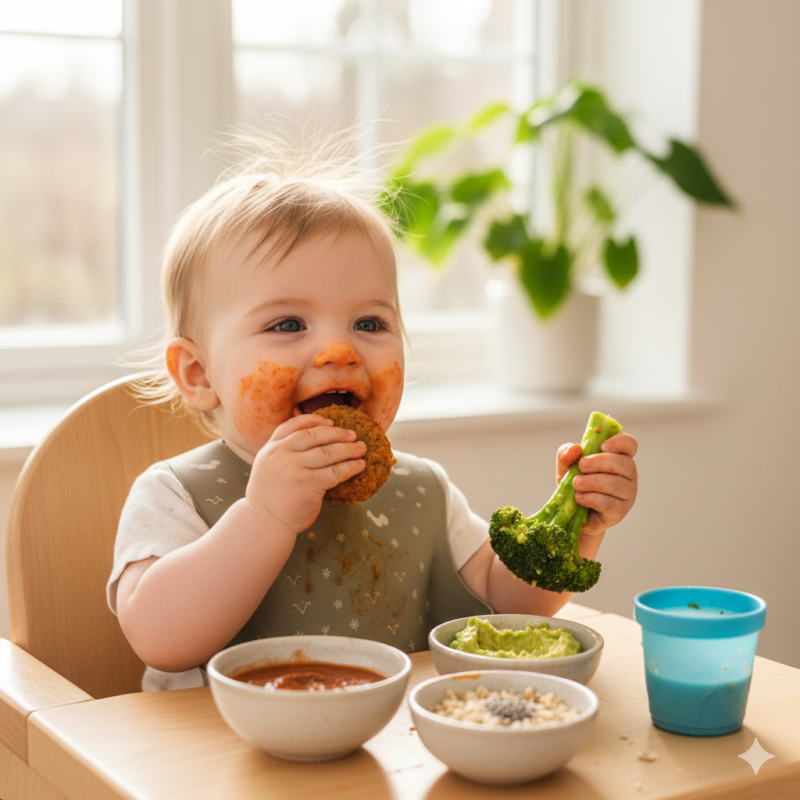
Let me give you a practical framework. The 7-Month-Old Feeding Schedule mostly thrive on this pattern:
Morning (7-8 AM): Breast milk or formula feed (6-8 oz if bottle-feeding)
Mid-Morning (9-10 AM): First solid meal—2-4 tablespoons of iron-rich food like lentil puree or mashed sweet potato
Noon: Milk feed (6-8 oz)
Afternoon (2-3 PM): Second solid meal—fruits, vegetables, or combination meals
Evening (5-6 PM): Milk feed (6-8 oz)
Dinner Time (6-7 PM): Optional third solid meal if baby shows interest
Bedtime (7-8 PM): Milk feed (6-8 oz)
Overnight: 0-2 milk feeds depending on baby’s needs
Notice I said “optional” for that third meal? That’s intentional. Some babies are ready for three solid meals at seven months; others do better with two substantial meals and just exploring food at dinner. Watch your baby, not the calendar.
The Milk-to-Solids Transition: What Parents Get Wrong
Here’s the question I hear most often in my clinic: “Dr. Shahzad, how much should I reduce milk feeds now that we’re doing solids?”
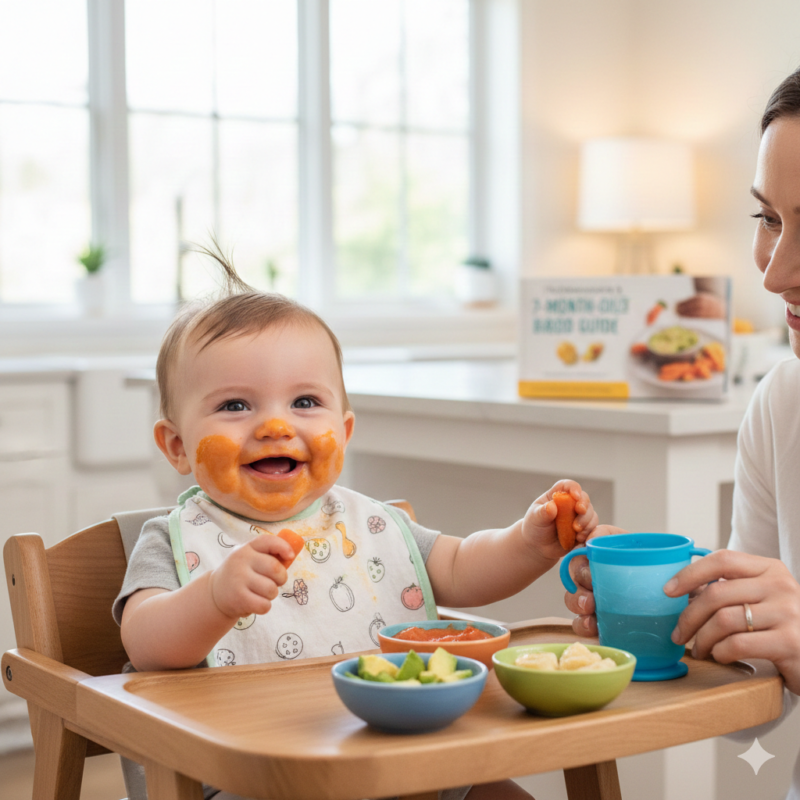
The answer surprises people: you shouldn’t be dramatically reducing milk yet. At seven months, breast milk or formula should still provide 24-32 ounces per day (or equivalent breastfeeding sessions). Solids are complementary—they complement milk, not replace it.
Think of it this way: milk is still the main course. Solids are the appetizer. That ratio will gradually flip over the next five months, but at seven months, don’t worry if your baby only takes a few tablespoons of solids. The WHO’s 2023 updated guidelines on complementary feeding emphasize “responsive feeding”—following your baby’s hunger and fullness cues rather than forcing amounts.
One clinical pearl: if your baby suddenly refuses solids after eating them well for a few weeks, check if you’ve inadvertently reduced milk feeds too much. A hungry baby often refuses solids because they want the quicker calories from milk.
Iron and Zinc: The Non-Negotiables
Let me be direct about this because it matters for your baby’s brain development. By seven months, your baby needs approximately 11 mg of iron daily. Breast milk provides only about 0.3 mg per day. Formula provides more, but it’s still not enough without solids.
This is where my clinical approach differs from what you’ll read elsewhere. I prioritize plant-based iron sources for seven-month-olds, particularly:
Lentils (red, yellow, or green): One of nature’s best iron packages for babies. Three tablespoons of cooked, mashed lentils provide about 2 mg of iron plus protein and fiber.
Chickpeas and mung beans: Easily digestible when well-cooked and mashed.
Dark leafy greens: Spinach or fenugreek leaves cooked and pureed into dal or khichdi.
Fortified infant cereals: If you use them, choose oat or multi-grain over rice, and verify “iron fortified” on the label (should provide at least 7 mg per serving).
Here’s a tip from my practice: pair these iron-rich foods with vitamin C sources. Serve mashed lentils with a few spoons of pureed tomato, or follow beans with some mashed papaya. Vitamin C increases iron absorption by up to 300%, according to research published in the American Journal of Clinical Nutrition.
For zinc, lentils and beans again come through, as do well-cooked oats and whole grain infant cereals. Aim for variety across the week rather than perfection at every meal.
My Recommended Food Groups for Month Seven
Let me break this down the way I do in clinic appointments:
Proteins and Iron Sources (Daily Priority)
- Lentils: red, yellow, green (cooked soft and mashed)
- Split mung beans (moong dal)
- Chickpeas (mashed thoroughly)
- Tofu (soft, in small pieces or mashed)
- Yogurt: full-fat, plain, unsweetened (2-3 tablespoons)
Vegetables (Aim for 2-3 Different Colors Daily)
- Sweet potato (rich in vitamin A)
- Carrot (steamed and mashed)
- Pumpkin or butternut squash
- Peas (mashed to prevent choking)
- Green beans (soft-cooked)
- Zucchini
- Beetroot (small amounts, well-cooked)
Fruits (2-3 Servings Daily)
- Banana (ripe, mashed)
- Avocado (nutrient-dense, healthy fats)
- Papaya (aids digestion)
- Apple (cooked until soft)
- Pear (ripe and mashed)
- Mango (ripe, pureed)
- Chikoo/sapota (very ripe)
Grains (Foundation Foods)
- Rice (well-cooked, mashed)
- Oats (cooked into porridge)
- Wheat (ragi/finger millet—exceptional calcium source)
- Broken wheat/dalia
- Quinoa (cooked very soft)
Healthy Fats (Essential for Brain Development)
- Ghee: ¼ to ½ teaspoon per meal
- Mild vegetable oils (olive, sunflower)
- Nut butters: smooth, thin consistency (see allergen note below)
Sample Daily Menu
Day 1:
- Breakfast: Rice and moong dal khichdi (mashed) with ¼ tsp ghee
- Lunch: Mashed sweet potato with a few spoons of pureed apple
- Dinner: Red lentil soup with carrot, mashed consistency
Day 2:
- Breakfast: Oats porridge cooked with formula/breast milk, topped with mashed banana
- Lunch: Mashed avocado with well-cooked rice
- Dinner: Yellow dal with pumpkin, mashed thoroughly
Day 3:
- Breakfast: Ragi porridge with a touch of jaggery (minimal) and ghee
- Lunch: Mashed chickpeas with steamed zucchini
- Dinner: Vegetable khichdi (rice, dal, carrot, peas—all mashed)
Each meal should be 2-4 tablespoons to start, working up to ½ cup as your baby shows hunger for more.
The Allergy Window: What Research Shows
Here’s where I see parents get confused by conflicting advice. The latest evidence—including a 2024 meta-analysis in the Journal of Allergy and Clinical Immunology—confirms that introducing common allergens between 6-12 months reduces allergy risk by up to 80%.
However, in my clinical practice, I take a measured approach based on family history and the baby’s gut maturity. For a seven-month-old, I recommend:
Introduce now: Peanut butter (smooth, thinned with breast milk), tahini (sesame), tree nut butters (almond, cashew—smooth only), wheat, soy (tofu).
Consider waiting until 8-9 months: Eggs and fish/seafood. While guidelines say these can be introduced at six months, I find that waiting an additional month or two allows the gut barrier to mature further, particularly if there’s a family history of allergies. This is my clinical judgment based on seeing hundreds of patients.
Why I suggest delaying eggs specifically: Egg protein is highly allergenic, and at seven months, your baby’s digestive enzyme production is still ramping up. By 8-9 months, pancreatic enzymes are more robust. The risk-benefit calculation shifts slightly later.
When you do introduce allergens, follow the “three-day rule”: offer the new food for three consecutive days, watching for reactions (rash, vomiting, diarrhea, breathing changes). If all goes well, that food is cleared, and you can move to the next.
Foods to Absolutely Avoid at Seven Months
Let me be crystal clear about safety:
Honey: Not until after 12 months. Risk of infant botulism—a potentially fatal paralytic illness. The CDC documents several cases annually.
Added salt: Your baby’s kidneys can’t handle a sodium load yet. No added salt in home cooking.
Added sugar: The USDA’s 2024 final rule emphasizes zero added sugar for infants under two years. That means no flavored yogurt, no juice (even “100% fruit”), no sweetened cereals.
Whole nuts and hard raw vegetables: Choking hazards. Keep foods soft enough to mash between your fingers.
Cow’s milk as a drink: Not until 12 months, though small amounts in cooking are fine. Cow’s milk lacks iron and can cause microscopic intestinal bleeding in young infants.
Unpasteurized dairy and honey-containing products: Food safety concerns.
Large pieces of sticky foods: Nut butters should be thinned; no spoonfuls of straight peanut butter.
Water Introduction: The Open Cup Advantage
Yes, your seven-month-old can—and should—start drinking water. Offer 4-8 ounces per day in an open cup or a straw cup, not a sippy cup with a spout.
Why does the cup type matter? Research on oral motor development shows that open cups and straw cups promote proper tongue positioning and jaw development. Sippy cups with hard spouts can encourage a tongue-forward thrust pattern that interferes with speech development later. The American Speech-Language-Hearing Association has position statements on this.
Don’t worry about spills. That’s part of learning. Put a towel down and let your baby explore drinking from a small cup you help them hold.
Texture Progression: The Munching Reflex
At seven months, your baby’s jaw is learning lateral movement—side-to-side munching. This is distinct from the up-and-down sucking motion they’ve used until now. This “jaw lateralization” is a neurological milestone, and it’s why texture matters this month.
You should be moving from completely smooth purees to “mashed with a fork” consistency. Think: lumpy mashed potatoes, not smooth soup. Your baby needs those lumps to practice munching.
Here’s a progression I recommend:
Weeks 1-2 of month seven: Smooth purees with tiny soft lumps Weeks 3-4: Fork-mashed foods with visible texture By end of month seven: Soft finger foods baby can grasp (steamed carrot sticks, toast strips, large pieces of soft-cooked pasta)
Some babies gag when you introduce texture. That’s normal—it’s their airway protection reflex working. Gagging looks scary but is actually safe. True choking is silent. If your baby is making noise (gagging, coughing), their airway is open. Stay calm, let them work through it. learn about choking and gagging from my another blog.
The Microbiome Connection
Your baby’s gut microbiome—the community of bacteria in their intestines—is being “primed” right now. Research from 2024-2025 shows that the diversity of fiber-rich foods introduced between 6-9 months predicts immune system strength years later.
What does this mean practically? Rotate your vegetables and fruits. Don’t just stick with sweet potato and banana because they’re easy. Include bitter greens, tart fruits, earthy lentils. Each plant food carries different prebiotic fibers that feed different beneficial bacteria.
Think of it as planting a garden. You want a rainforest of diversity, not a single-crop farm.
Addressing the Heavy Metals Concern
I get asked about this weekly. A 2024 congressional report and FDA testing found concerning levels of heavy metals (arsenic, lead, cadmium) in some commercial baby foods, particularly rice-based products.
Here’s my advice: prioritize home-prepared foods using the iron-rich ingredients I’ve listed. When you do buy commercial baby food:
- Choose brands that third-party test for heavy metals
- Avoid rice-based products as the primary grain
- Rotate brands and food sources to minimize exposure to any single contaminated source
- Look for USDA Organic certification (reduces pesticide exposure, though not a guarantee against heavy metals)
Lentils, vegetables, and fruits prepared at home from fresh ingredients sidestep much of this concern. Yes, it takes more time. But for this critical seven-to-twelve-month window, it’s worth the effort.
Responsive Feeding: Reading Your Baby’s Cues
The WHO’s 2023 updated guidelines emphasize this above all else: follow your baby’s lead. Responsive feeding means:
Signs of hunger: Leaning forward, opening mouth, reaching for food, excitement when food appears
Signs of fullness: Turning head away, closing mouth, pushing food away, becoming distracted, fussing
Never force “one more bite.” Never use food as a reward or punishment. Your job is to offer nutritious foods at regular intervals. Your baby’s job is to decide whether and how much to eat.
This approach prevents feeding struggles later and supports healthy appetite regulation. Research published in Pediatrics shows that pressuring children to eat or restricting food paradoxically increases obesity risk.
When to Worry: Red Flags
Call your pediatrician if:
- Your baby refuses all solids for more than a week after previously accepting them
- You see blood in stool (can indicate cow’s milk protein intolerance)
- Persistent vomiting or diarrhea after introducing new foods
- Rash, hives, or facial swelling after eating (allergic reaction)
- Your baby seems constantly hungry despite adequate milk and solid feeds
- No interest in any food by 8 months
- Significant weight loss or plateau
The Bottom Line
Month seven is when complementary feeding gets real. Your baby needs iron, zinc, and diverse nutrients that milk alone can’t provide. But milk remains their primary nutrition source—don’t rush the transition.
Focus on iron-rich lentils, colorful vegetables, and healthy fats. Introduce textures gradually as your baby’s munching reflex develops. Prioritize home-prepared foods when possible to control quality and reduce heavy metal exposure. Follow responsive feeding cues, not portion guidelines.
And remember: every baby is different. Some will enthusiastically eat ½ cup of food per meal at seven months. Others will take three tablespoons and seem satisfied. Both are normal if your baby is growing well, producing wet diapers, and meeting developmental milestones.
Your pediatrician is your partner in this journey. Don’t hesitate to bring questions to your well-child visits. We’d rather address small concerns early than see feeding struggles escalate.
Frequently Asked Questions
1. My baby is 7 months old and refusing solids. Should I be worried?
It is very common for babies to hit a “solid food strike.” This often happens if they are teething, feeling under the weather, or if they’ve been given a bit too much milk right before a meal. Don’t force it. Focus on “responsive feeding”—keep offering a variety of textures without pressure, and they will likely return to eating within a few days.
2. Can I give my 7-month-old water?
Yes! At seven months, you can offer 4–8 ounces of water per day. It’s best to use an open cup or a straw cup rather than a sippy cup. This helps them develop the mouth muscles needed for speech and proper swallowing.
3. Is it okay to skip purees and go straight to finger foods?
This is often called “Baby-Led Weaning.” At seven months, it’s perfectly fine to offer soft finger foods (like steamed carrot sticks or avocado wedges) alongside mashed foods. The goal is to move away from perfectly smooth liquids so they can practice their side-to-side “munching” jaw movements.
4. How do I know if my baby is allergic to a new food?
Watch for the “Big Three” signs: skin reactions (hives or a sudden rash), digestive upset (projectile vomiting or diarrhea), or breathing issues (wheezing or swelling). Use the “three-day rule”—introduce one high-risk allergen at a time and wait three days before starting another to easily pinpoint the culprit.
5. How much iron does my baby actually need from food?
A 7-month-old needs about 11 mg of iron daily. Since breast milk is naturally low in iron, you should aim to include an iron-rich food—like lentils, fortified oats, or pureed spinach—in at least two of their daily meals.
References:
- American Academy of Pediatrics. Infant Food and Feeding. AAP Policy Statements, 2024.
- USDA Food and Nutrition Service. Final Rule on Added Sugars in Infant Nutrition. 89 FR 31962, 2024.
- WHO. Guideline on Complementary Feeding of Infants and Young Children 6-23 Months of Age. Updated 2023.
- Journal of Allergy and Clinical Immunology. Meta-analysis: Early Introduction of Allergens and Allergy Prevention. DOI: 10.1016/j.jaci.2023.11.012, 2024.
- ESPGHAN Committee on Nutrition. Plant-Based Diets in Infancy:
- FDA. Closer to Zero Action Plan: Heavy Metals in Baby Foods. Updated 2024.
- Health Canada. Nutrition for Healthy Term Infants: Recommendations from Six to 24 Months. Updated 2024.
- American Journal of Clinical Nutrition.. The efficacy of a local ascorbic acid–rich food in improving iron absorption.
- Associations between dietary fibers and gut microbiome composition in the EDIA longitudinal infant cohort
Dr. Shahzad Khurram is a dedicated Pediatrician and medical researcher passionate about empowering parents with evidence-based health insights. With a clinical focus on childhood nutrition and neurodevelopment, Dr. Khurram translates complex 2024–2026 clinical data into actionable advice for modern families. Through Medifitverse, he bridges the gap between pediatric science and everyday parenting, ensuring every child has the nutritional foundation they need to thrive. His work is guided by the latest standards from the American Academy of Pediatrics and current nutritional research.
Medical Disclaimer: The information on Medifitverse, including text, graphics, and images, is for educational and informational purposes only. This content is not intended to be a substitute for professional medical advice, diagnosis, or treatment. Always seek the advice of your pediatrician or other qualified health provider with any questions you may have regarding a medical condition. Never disregard professional medical advice or delay in seeking it because of something you have read on this website.However, every baby is different. Consult your doctor before introducing allergens or changing your infant’s diet.